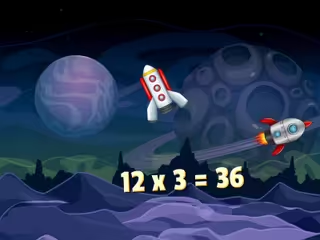
Multiplication & Times Tables Games
Knowing the times tables by heart is one of the big milestones of elementary math. In the US, the Common Core standards expect children to know every product of two one-digit numbers from memory by the end of grade 3. Getting there takes lots of short, regular practice, and that is where games help: a quick round before dinner does more than a long worksheet once a week. Every game on this page is about multiplication or its partner, division, and plays free in the browser on computers, tablets and Chromebooks.
Start with the games where you pick the answer from a few choices, which builds confidence, then move on to the faster games where the product has to come straight from memory. The division games come last because they use the same facts backwards: if 6 × 7 = 42, then 42 ÷ 7 = 6. For more ideas, see our parent's guide to math games and these mental math tricks, or browse every math game on the site.
Start here: pick the right product
Good first games for grades 2 and 3. Each problem comes with a handful of possible answers, so children can check their thinking instead of freezing on a blank box.


Build speed with the times tables
Once the facts are familiar, these games add a clock, a race or an enemy submarine, so the answer has to come quickly. Ideal for grades 3 and 4 and for anyone brushing up.

Multiplication backwards: division games
Division is where the times tables pay off. These games ask for quotients, true-or-false division facts and divisibility, and every one gets easier the better you know your multiplication.
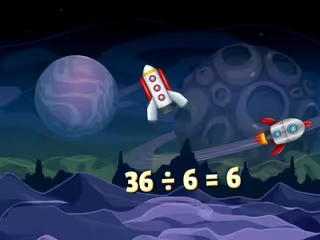

Mixed fact practice
Multiplication mixed with the other operations, for children who know their tables and need to read each problem carefully.

Multiplication games FAQ
At what age do children learn multiplication?
Most US schools introduce multiplication in grade 2 through equal groups and arrays, and grade 3 is the main times tables year: by its end, children are expected to know all products of two one-digit numbers from memory. That usually means ages 7 to 9, though every child moves at their own pace.
What is a good order for learning the times tables?
A common approach is to start with the 1, 2, 5 and 10 tables, which follow easy patterns, then the 3, 4 and 9 tables, and finish with 6, 7 and 8. Each fact you learn also gives you its reverse, so knowing 3 × 8 means you already know 8 × 3.
How long should my child practice?
Short and often works best: ten minutes a day spread over the week usually helps more than one long session. Let your child replay a game they enjoy, since repeating the same facts is exactly what makes them stick.
Are these multiplication games free?
Yes. Every game on this page is free in the browser on computers, tablets, phones and Chromebooks, with no download or account. Some games show a short ad before they start.