Math Games for Kids: A Parent's Guide
Most “educational math games” fall into one of two categories: boring drill apps that kids abandon after two days, or flashy games where the math is decoration. The sweet spot — games that are fun and actually teach math — is smaller than parents are usually led to believe.
This guide covers what to look for, what to avoid, and which specific games work at different ages.
What actually works
Research on educational games consistently finds three things matter:
- Immediate feedback. The game must tell the child instantly whether they got it right. Delayed feedback doesn’t teach.
- Adaptive difficulty. The game should get harder as the child improves, and easier when they struggle. A game that’s too hard teaches frustration; too easy teaches boredom.
- Short sessions with a clear end. 5-10 minute games that finish are better than endless games that never end. Kids need the satisfaction of finishing.
What doesn’t work: games that reward speed over accuracy, games with ads that interrupt play, and games where the math is optional (you can win by clicking randomly).
By age group
Ages 4-6 (Kindergarten)
Focus on: counting, number recognition, simple addition within 10.
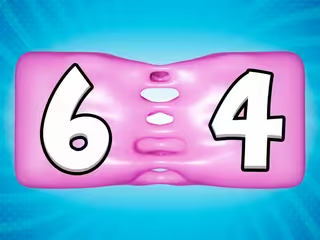
- Make Ten - Tile Merge — slide number tiles so they add up to ten. A playful way to learn the number pairs that make 10.
- Look for games with no timer at this age. Time pressure makes young kids anxious and encourages guessing.
Ages 7-9 (1st-3rd grade)
Focus on: addition and subtraction within 100, multiplication tables, basic word problems.
- Math Dog Expanded Form — match numbers written in expanded form (like 300 + 40 + 5) to their standard form. Good place-value practice.
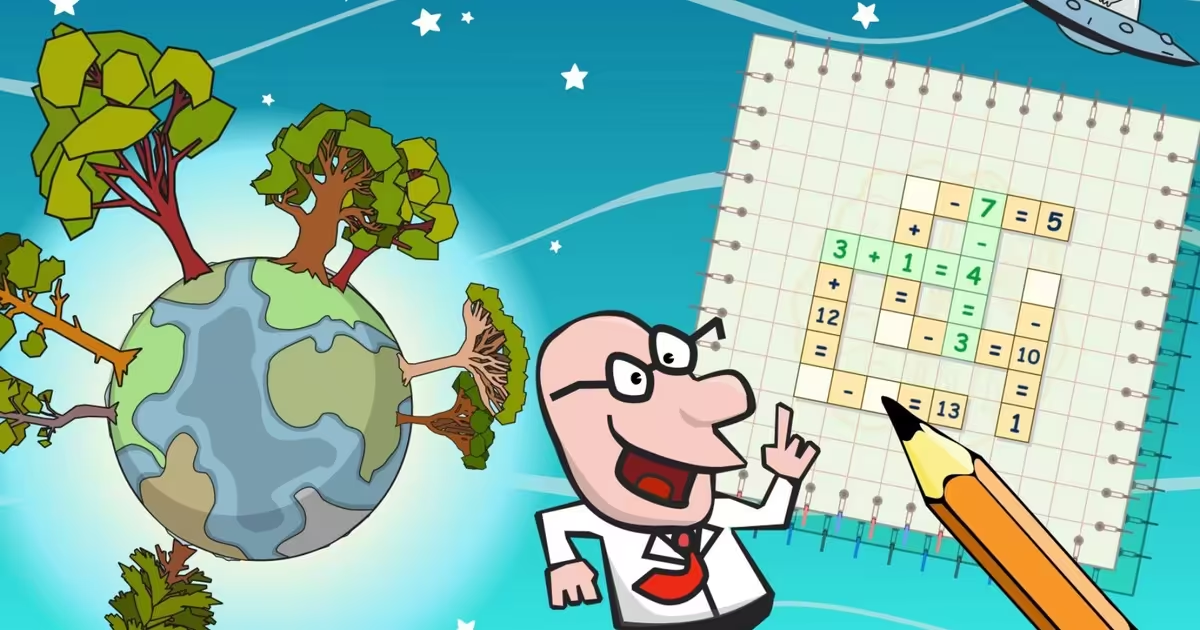
- Mind Games: Math Crosswords — crossword-style grids where each answer constrains the next. Catches careless arithmetic slips.
Ages 10-12 (4th-6th grade)
Focus on: multi-step problems, fractions, decimals, early algebra.
- Math is Easy! — match expressions to their answers, with levels that grow from simple sums to fractions, roots and powers.
- At this age, “math games” that are too obviously educational get rejected. Consider logic games instead — Sudoku, Minesweeper, and similar games build mathematical thinking without looking like homework.
What to avoid
- Games with constant ad interruptions. An occasional ad between rounds is how free games pay for themselves, but a game that stops every minute for a video breaks the concentration it’s supposed to build.
- Games that reward speed. A child who learns to answer fast but wrong has learned the wrong thing.
- “Educational” games that are just worksheets with animation. If the core mechanic is “answer 20 questions in a row,” it’s a worksheet.
- Games that require an account. For a 6-year-old, signing up for anything is a friction point that kills the habit.
A practical approach
Don’t try to make math games the primary way your child learns math. Use them as supplementary practice — 10-15 minutes a day, ideally right after school when focus is still good.
Rotate between 2-3 games so it doesn’t get stale. And play alongside them sometimes — not to check their work, but because kids learn better when a parent is engaged with the same problem.
Start with Make Ten - Tile Merge if your child is 5-7, or Math Dog Expanded Form if they’re 8-10 and ready for something more involved.