10 Best Puzzle Games for Adults
Most “puzzle games for adults” lists are full of match-3 games and hidden object hunts — fine if you want to relax, but not what “puzzle” should mean. The games below require actual thinking: each one rewards reasoning over luck or speed, and every one of them plays free in your browser.
1. Classic Sudoku
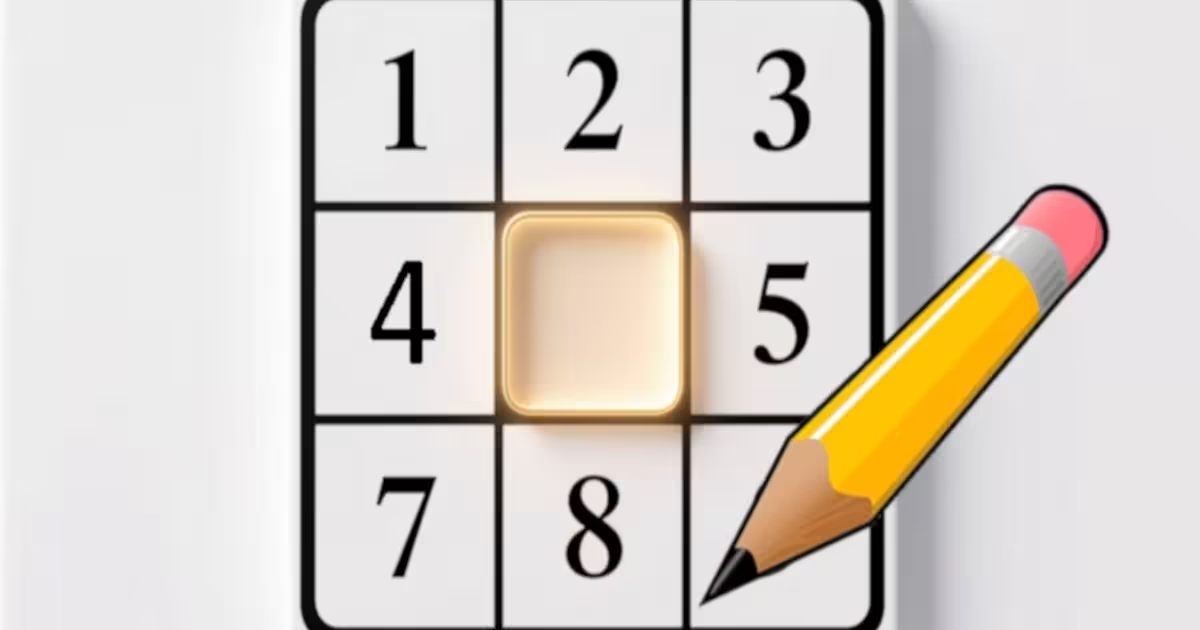
Classic Sudoku is the standard for a reason. Every puzzle is solvable by pure deduction — no guessing required. The difficulty comes from how many candidates you have to track at once.
Best for: Slow, methodical thinking. Play for 15-30 minutes.
2. Minesweeper Infinite
Minesweeper Infinite looks simple but requires constant deduction. Every number is a clue. Every move either confirms or eliminates possibilities.
Best for: Quick sessions with real mental effort. Play for 5-10 minutes.
3. HexaFill
HexaFill moves path puzzles onto a hexagonal grid. You drag from a starting cell to draw routes that must cover the required cells without overlapping or running into a dead end — simple until you’re three moves deep and realize you’ve blocked yourself.
Best for: Spatial thinkers who find square grids boring.
4. Rat’s House - Nonogram
Rat’s House - Nonogram is a proper nonogram (also called Picross or Griddlers): number clues on each row and column tell you which cells to fill, and the hidden picture only appears at the end. Solved puzzles earn cheese that you spend decorating the rats’ rooms.
Best for: Pattern recognition practice. Very satisfying when the picture emerges.
5. Math Matchsticks
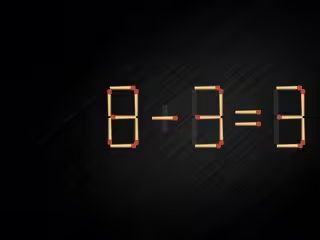
Math Matchsticks shows an equation built from matches that doesn’t add up, and tells you how many matches you may move. The arithmetic is simple; seeing which single match turns a 6 into a 5, or a plus into a minus, is not. There are over 100 puzzles.
Best for: People who find Sudoku too abstract and want something more concrete.
6. Move the Tower
Move the Tower is the Tower of Hanoi: shift a stack of disks to another rod, one disk at a time, never putting a larger disk on a smaller one. Every extra disk roughly doubles the number of moves you need, so planning — not trial and error — is what gets you through the later levels.
Best for: Step-ahead planning and recursive thinking.
7. Candy Flow Factory
Candy Flow Factory is a flow-style path puzzle: connect each pair of matching candy machines with tubes so that no paths cross and every playable tile gets filled. There are 90 handcrafted levels, with no timer or move limit.
Best for: Visual thinkers who like planning routes.
8. Loop Ghost
Loop Ghost is a time-loop puzzle. When a cycle ends, a ghost of your past self replays your exact moves, so you solve each level by cooperating with earlier versions of yourself — one holds a button while you walk through the door it opens.
Best for: Long sessions. The later levels ask you to plan several cycles ahead.
9. Thief. Crack the safe
Thief. Crack the safe hands you a note full of clues and a locked safe. Work out the password from the clues, enter it and open the safe — a steady supply of short deduction riddles.
Best for: Fans of logic riddles who like a clear right answer.
10. Numerology by Ubeezy
Numerology by Ubeezy is logic in miniature: guess a secret number from 1 to 100 in five tries, with a higher-or-lower hint after each one. Halving the range every time is the core idea — but even perfect halving can need up to seven guesses to be certain, so with five you’re also playing the odds.
Best for: A two-minute logic warm-up.
How to get better at puzzles
The single biggest improvement you can make: learn the techniques, not just the answers.
For Sudoku, that means learning about naked singles, hidden singles, and pointing pairs. For Minesweeper, it means understanding the “1-2-1” and “1-2-2-1” patterns. For any puzzle, the underlying skill is the same — eliminate what’s impossible, then see what’s left.
Start with Classic Sudoku if you want the most accessible entry point, or Minesweeper Infinite if you prefer a faster pace.