Chess vs Checkers: Which One Should You Learn First?
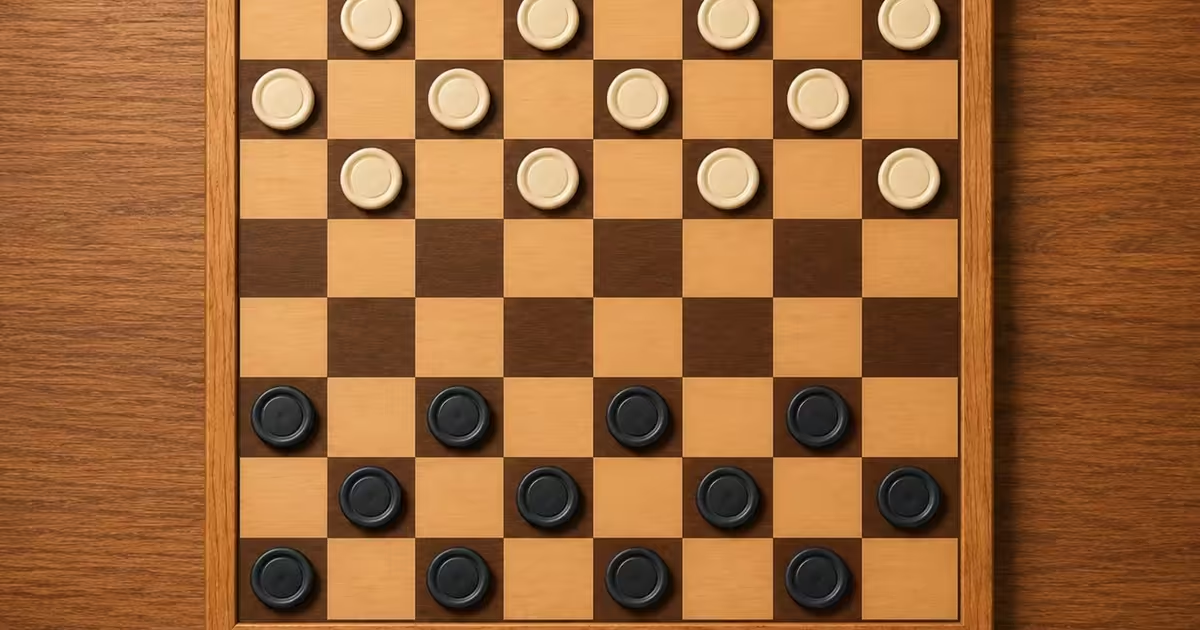
Chess and checkers are often lumped together as “classic board games.” They’re not the same thing — not even close. The differences matter if you’re choosing which one to learn first.
The rules comparison
| Chess | Checkers | |
|---|---|---|
| Board | 8x8, 64 squares | 8x8, 64 squares |
| Starting pieces | 16 per player | 12 per player |
| Different piece types | 6 (pawn, knight, bishop, rook, queen, king) | 1 (all pieces move the same way) |
| Movement | Each piece type moves differently | All pieces move diagonally forward |
| Capture | Most pieces capture by landing on the enemy piece | Captures are mandatory jumps |
| Win condition | Checkmate (king cannot escape) | Capture all enemy pieces or block all moves |
Which is harder?
Chess is harder — but not for the reason most people think.
Checkers has fewer rules and fewer piece types, so the rules are easier to learn. But checkers played at a high level is a solved game — perfect play results in a draw. That means at the top level, both players know the optimal moves, and the game becomes about forcing mistakes.
Chess is not solved. There are more possible chess positions than atoms in the observable universe. That means even at the top level, there’s room for genuine creativity and long-term strategy.
For beginners, checkers is easier to learn and can be played reasonably well within an hour. Chess takes longer to play competently — but the ceiling is much higher.
Which should you learn first?
It depends on your goal:
-
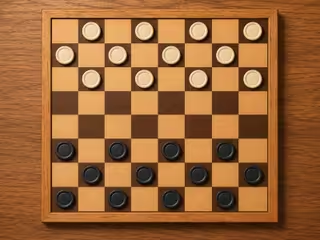
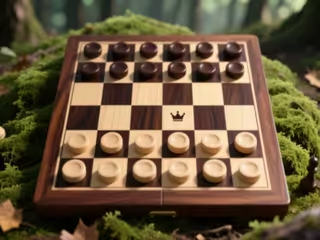
If you want to play something with friends or family tonight: Learn checkers. The rules take 10 minutes, and you can have a real game immediately. Try Classic Checkers or Classic Checkers: Forest.
-
If you want a lifelong hobby with depth: Learn chess. The rule set is bigger, but the skill ceiling is essentially unlimited. Start with Mate in Chess to build pattern recognition, then move to full games.
-
If you want to train strategic thinking: Both work, but chess trains more distinct skills (piece coordination, space control, tactical patterns) because it has more piece types.
Can you learn both?
Yes, and many players do. The skills overlap significantly — both reward forward planning, pattern recognition, and understanding when to trade pieces. Learning checkers first can be a gentle introduction to board game thinking before you take on chess.
A practical path: play checkers for a week to build the habit of thinking ahead, then switch to chess. The transition is easier than starting cold.
Whichever you pick, play 10 games before deciding whether you like it. Both games have a learning curve where the first few games feel random — that passes faster than you’d expect.